Scams targeting Aussie families right now
Scammers are getting smarter and Aussie families are in the firing line.
Cyber criminals are finding new ways to trick Aussies into giving up their money or information. The following scams feel real, often look legitimate, and they’re targeting the digital services we use everyday.
Here are some of the latest scams targeting Aussie families right now, and how to stay a step ahead.
Fake job ads flooding facebook groups
Facebook pages and groups, including suburb groups, buy/swap/sell and parenting groups, have all become a hotspot for fake job offer posts. These scams often promote flexible, work-from-home roles that don’t require experience and pay a high hourly fee. Once you contact the scammer, they might ask for a copy of your licence, bank details, or even an upfront “training fee.”
The National Anti-Scam Centre recently removed over 29,000 scam social media accounts and 1,850 fake job ads between September 2024 and March 2025.
Encourage your teen or job-seeking family members to be cautious. Real jobs won’t ask for money to get started or communicate through WhatsApp or Telegram. Always check the company’s official website before applying.
ATO Tax-time phishing scams
End of financial year is the peak season for scammers impersonating the ATO or myGov. You might get an email or text that looks official, asking you to click a link to claim a refund, verify your details, or fix an “error” in your tax return.
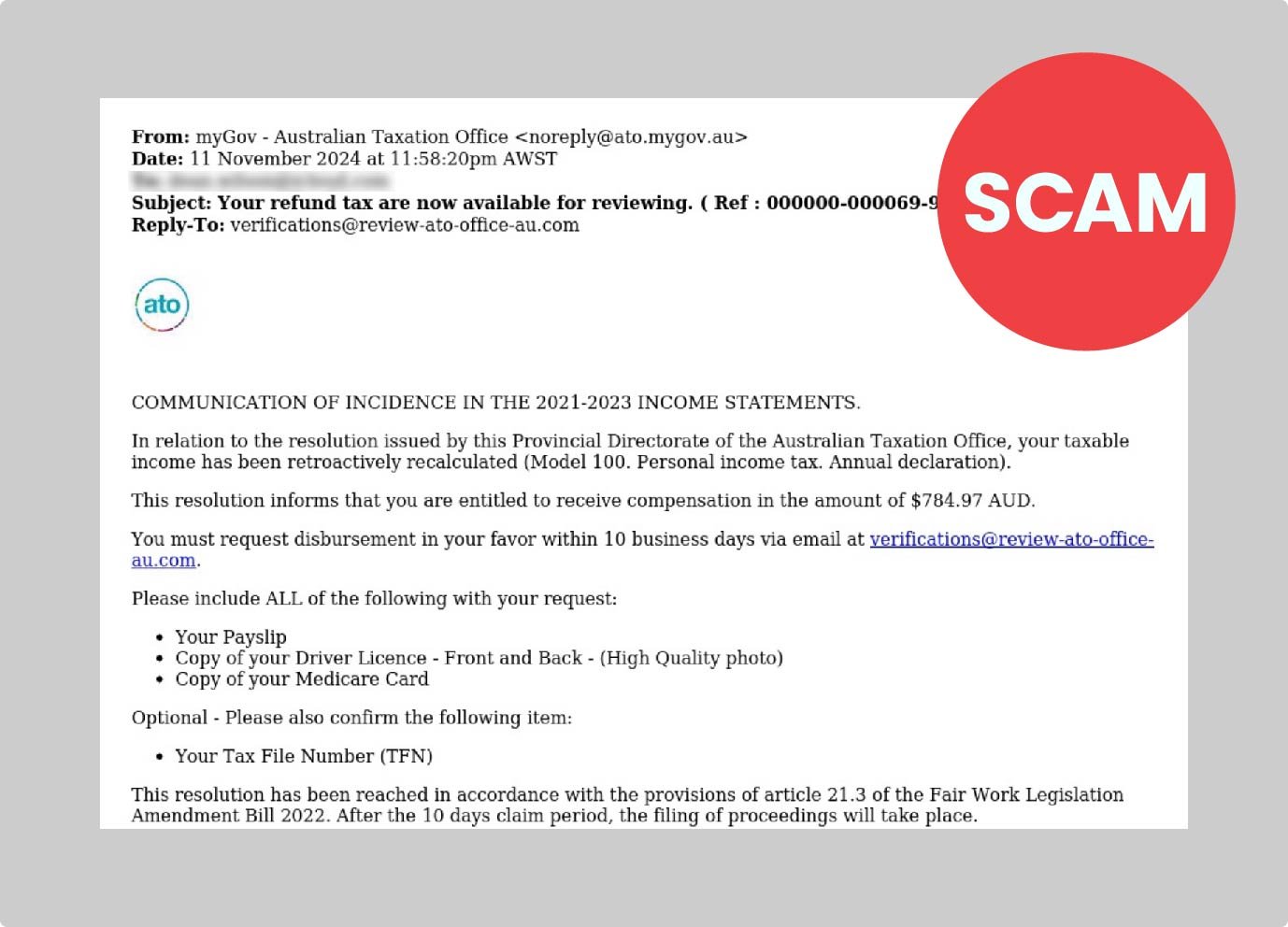
Image source: ATO
CPA Australia has warned these scam emails are becoming more convincing, even using real-looking branding and arriving early in the morning to catch people off guard. View examples here.
The ATO will never ask for your personal information or passwords via email or SMS. If in doubt, go directly to my.gov.au. Never click the link in the email or SMS.
Fake online shops targeting Aussie shoppers
You might have seen the ABC News investigation into overseas-run scam stores that pose as Aussie retailers on Facebook, Instagram and Shopify, especially during big sales periods.
These fake online stores use local-sounding names, stolen shopfront photos and fake reviews to appear legitimate. Orders are often shipped from overseas via dropshipping and arrive as poor-quality knock‑offs. Returning them can cost as much as the item itself. User data is sometimes also sold on to other scammers.
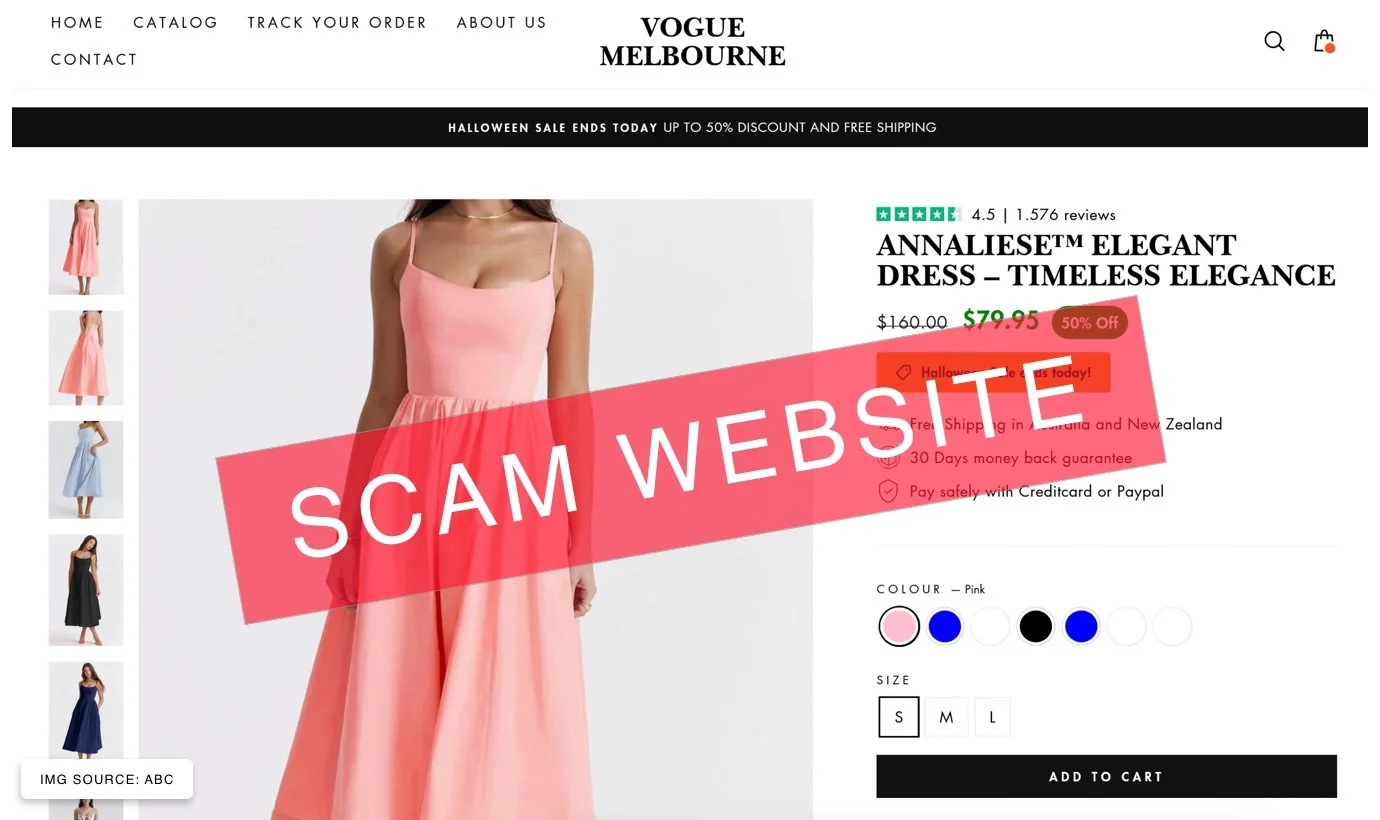
Image: ABC
Tip: Shop with trusted brands online. If unsure, check the ABN, search reviews outside the website, and pay by credit card so you can request a chargeback if needed.
Fake giveaways on instagram and tiktok
Scammers are mimicking popular Aussie brands like Woolies, Bunnings and Kmart, offering fake $500 gift cards, kids giveaways, or “limited time” family bundles. The fake accounts tag users to make the competition look legitimate, then lead you to phishing sites that ask for credit card info or personal details.
These scams are especially common on TikTok and Instagram where teens and parents are used to engaging with branded content.
If you’re entering a giveaway, check the profile is verified with a blue tick (Meta Verified) and don’t trust links in DMs or comments. Real brands won’t ask you to “confirm” your identity using your card.
AI Deepfakes, impersonation scams and fake government calls
Scammers are now using AI to create fake voices and videos (known as deepfakes) that mimic trusted figures. One of the most alarming recent examples involved ABC journalist Hamish Macdonald being impersonated in a scam investment ad so realistic, even he struggled to tell it was fake. Watch the video here.
It’s not just videos. The ACCC has issued a national warning that scammers are spoofing ACCC phone numbers to make fake calls, pretending to be from the government and asking for personal details or payments. The ACCC says they will “never contact people from their reception numbers” and urged the public not to provide information over the phone.
Talk to your family about how easily voices, videos, and phone numbers can be faked now. If something feels off, hang up and check the contact details on the agency’s official website.
Scams aren’t always obvious, and the people behind them are professionals at making things look and sound real. But by staying alert, asking good questions, and having open conversations at home with your family, you can make it much, much harder for scammers to succeed.
For more reading on scams, visit the National Anti-Scam Centre news feed or read the Little Book of Scams (Free PDF).
You’ve been reading a FamilySafe Guide. Access more free tools and resources here.
Presented by ShadowSafe | Brisbane-based cyber security & IT firm.