Microsoft Edge now blocks ‘Scareware’
A full-screen red warning takes over your browser, a sound starts playing, and a phone number tells you to call "Microsoft support" immediately. Your mouse stops working. The X button disappears.
It's a scareware scam.
A fake alert designed to panic you into calling a number where someone will try to access your computer or take your money.
In Australia, remote access scams (where someone talks you into giving them control of your computer) saw losses spike 52% in early 2024, with the average victim losing $17,943. People over 65 are hit the hardest.
Microsoft Edge new ‘scareware’ blocker
Microsoft Edge now has a scareware blocker feature turned on by default. It uses a local AI model on your device to recognise when a webpage is faking a security warning. Nothing gets sent to the cloud. If it detects a scam, Edge exits the full-screen page, kills the audio, and shows you a warning instead.
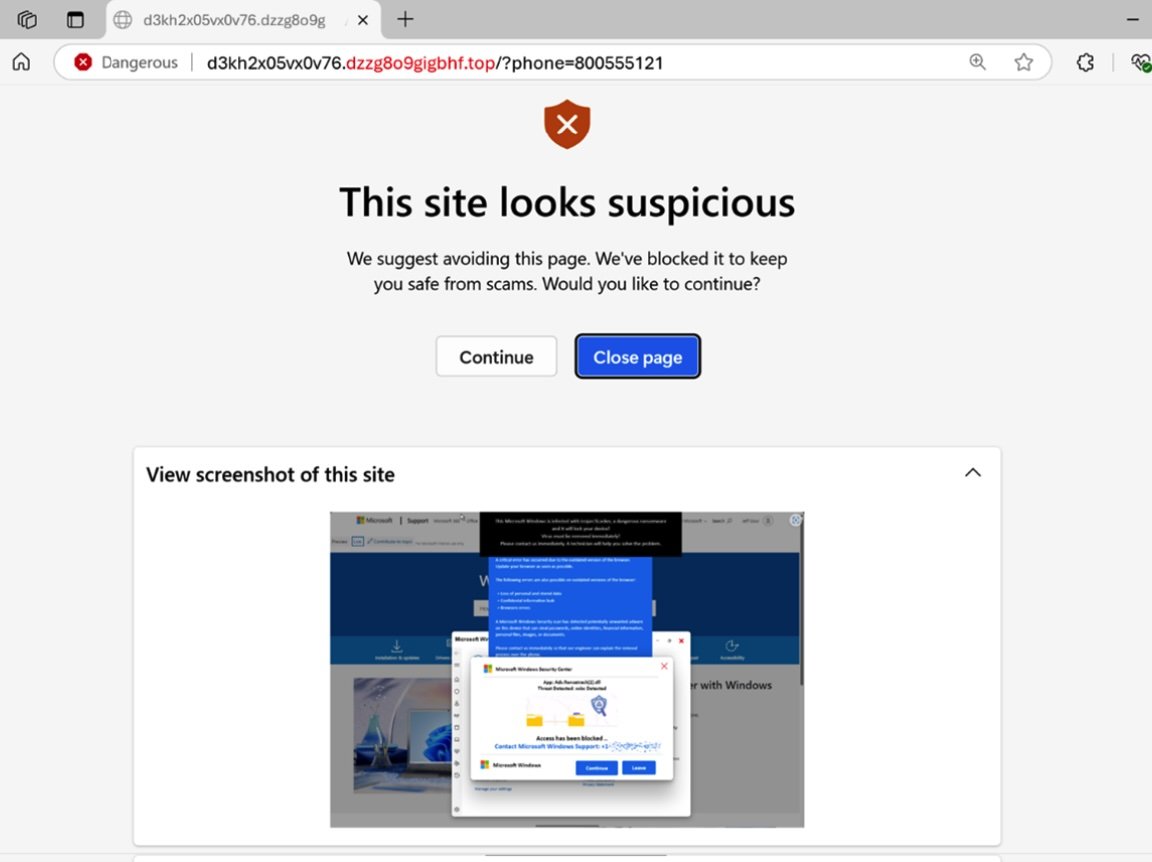
Image source: Microsoft
During Microsoft’s own testing of this feature, each time someone reported a scam through the blocker, it protected an average of 50 other users.
The latest update added a scareware sensor that can notify Microsoft Defender (built-in security application) in real time when a new scam is detected. Recent tests show scams are caught and blocked after reaching just 5% of targets — down from 30% without the sensor perilously.
This is a great effort from Microsoft and a good use case for local AI on modern devices.
You can read Microsoft's full announcement here.
What this means for your business
If your team uses Edge on Windows or Mac, this new feature is likely already active if you’ve updated your browser. It runs on any machine with at least 2GB of RAM and four CPU cores (most modern computers).
It's a good step, but scareware is just one type of threat. Phishing emails, fake invoices, and social engineering calls are still the biggest risks Australian small businesses deal with day-to-day.
The ACCC reported over $2 billion in combined scam losses across Australia in 2024, with phishing losses tripling into early 2025.
If someone on your team sees a full-screen warning like this, the right move is to close the tab and inform your IT team.
Follow ShadowSafe on LinkedIn for more updates.
Speak to our team about securing your business. Learn more